Utah’s unique climate and hard water make the right water heater especially important for home comfort. When comparing a tankless water heater vs a traditional system, both provide reliable hot water but differ in efficiency, cost, and performance.
At Just Right Plumbing, Heating, & Cooling, we have over 15 years of experience helping Utah homeowners select and install dependable water heating systems. We’ll break down the key differences so you can make an informed decision.
What Are Tankless and Traditional Water Heaters?
Traditional and tankless water heaters both provide hot water for your home, but they do so in different ways. A traditional water heater stores and heats water in a tank, while a tankless water heater heats water on demand.
Both options work well in Utah homes, but household size, hot water demand, and available space can all affect which system is the better fit.
How Traditional Tank Water Heaters Work
Traditional water heaters store hot water in a tank, typically ranging from 30 to 80 gallons. These heaters are available in gas and electric models, and you get consistent hot water until the tank is empty.
Once the hot water supply is used, the system must reheat the tank before more hot water becomes available.
How Tankless Water Heaters Operate
Tankless water heaters heat water on demand rather than storing it.
When a hot water fixture is turned on:
- Cold water enters the unit
- A gas burner or electric element heats the water
- Hot water flows directly to the fixture
Because water is heated as needed, tankless systems can provide a continuous supply of hot water when properly sized for the home.
Key Differences Between Tankless and Traditional Water Heaters
When comparing a tankless vs traditional water heater, there are several key differences.
- Traditional systems store hot water; tankless heats on demand
- Tankless provides continuous hot water; traditional systems can run out
- Tankless is more energy efficient
- Traditional costs less upfront; tankless costs more initially
- Tankless lasts longer (15–20+ years vs. 8–12)
- Tankless saves space; traditional needs a tank
- Traditional needs flushing; tankless needs descaling
- Tankless handles demand better when properly sized
For many homeowners, the choice comes down to balancing upfront costs, long-term efficiency, available space, and household hot water demand. Both systems can perform well when properly installed and maintained.
Traditional vs Tankless Water Heater Comparison
Here’s how a tankless water heater vs a traditional system compares:
| Feature | Traditional Water Heater | Tankless Water Heater |
|---|---|---|
| Cost | • Lower upfront cost ($600–$1,500)
• Simpler installation in many homes |
• Higher initial investment ($1,000-$3,000)
• May require utility upgrades during installation |
| Lifespan | • Typically lasts 8–12 years
• Tank wear can impact longevity |
• Often lasts 15–20 years or more
• Longer service life with routine maintenance |
| Space | • Requires floor space for a storage tank
• Larger overall footprint |
• Compact wall-mounted design
• Frees up storage and utility room space |
| Efficiency | • Maintains hot water in a storage tank
• Can experience standby heat loss |
• Heats water only when needed
• Generally more energy efficient |
| Maintenance | • Annual flushing and anode rod inspection | • Requires annual descaling in Utah’s hard water environment
• Routine maintenance helps maintain performance |
Pros and Cons: Traditional vs Tankless Water Heaters
Both tankless water heaters and traditional water heaters have advantages and drawbacks. The best option depends on your home’s hot water needs, available space, and long-term goals.
Traditional Water Heater Benefits and Drawbacks
Benefits
- Lower upfront equipment costs
- Simpler installation in many homes
- Reliable and familiar technology
- Available in a variety of tank sizes
Drawbacks
- Limited hot water supply based on tank capacity
- Requires more installation space
- Experiences standby heat loss as water is kept hot
- Typically has a shorter lifespan than tankless models
Tankless Water Heater Benefits and Drawbacks
Benefits
- Heats water on demand
- Compact, space-saving design
- Higher energy efficiency in many households
- Longer expected lifespan
- Continuous hot water when properly sized
Drawbacks
- Higher upfront investment
- More complex installation requirements
- May require gas line, venting, or electrical upgrades
- Requires routine descaling in hard water areas
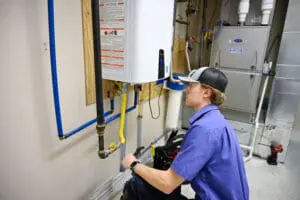
Cost Comparison: Tankless Water Heater vs Traditional in Utah
When comparing the cost of a tankless water heater vs traditional systems, it is important to consider both upfront and long-term expenses.
Professional water heater installation is the best way to ensure the system is properly sized and installed for long-term performance. You should also consider lifespan, maintenance needs, and energy efficiency when comparing options.
Upfront Purchase and Installation Costs
Traditional water heaters are often the more budget-friendly option for homeowners looking for a direct replacement.
Tankless systems generally involve:
- Higher equipment costs
- Additional installation requirements
- Potential utility upgrades
- Specialized venting or electrical work
The overall installation process varies based on your home’s existing setup and utility connections.
Long-term Operating and Maintenance Costs
Both systems require routine maintenance to operate efficiently and maintain their expected lifespan.
Traditional water heaters benefit from periodic tank flushing to help reduce sediment buildup, while tankless units require regular descaling, especially in areas with hard water.
If your system is showing signs of wear or reduced performance, professional water heater repairs in Salt Lake City can help identify potential issues before they become larger problems.
Energy Efficiency and Performance in Utah’s Climate
Energy efficiency is one of the most common reasons for homeowners to compare a tankless water heater vs a traditional water heater.
Traditional systems continuously maintain a tank of hot water, even when hot water is not being used. This can result in standby heat loss. Tankless systems heat water only when needed, helping reduce unnecessary energy use. For many households, this makes a tankless unit the more efficient option.
However, efficiency gains depend on household size, hot water usage patterns, and the condition of your system.
Winter Performance Considerations
Modern tankless water heaters are designed to operate reliably during cold weather when properly installed.
Important considerations include:
- Proper indoor installation
- Adequate venting
- Freeze protection features
- Correct sizing for incoming water temperature
Traditional water heaters also perform reliably during winter conditions and are generally unaffected by short periods of increased hot water demand.
Hard Water Impact on Both Systems
Hard water is a common concern for many Utah homeowners and can affect both traditional and tankless water heaters.
Mineral buildup can:
- Reduce efficiency
- Restrict water flow
- Increase wear on components
- Shorten the system’s lifespan
Traditional systems typically benefit from regular tank flushing, while tankless systems often require periodic descaling to remove mineral deposits.
Routine maintenance helps protect performance and extend the life of either type of water heater.
Which Water Heater Type Is Right for Your Utah Home?
If you’re looking to install or replace a water heater, the right type depends on your household size, hot water usage, and long-term goals. Understanding your needs can help narrow down the best option.
Here’s what to consider:
Best Scenarios for Traditional Water Heaters
A traditional water heater may be the better choice if:
- You are looking for a lower upfront investment
- Your current system uses a standard tank setup
- You want a simpler replacement process
- Your household has moderate hot water demands
- Space is not a major concern
Best Scenarios for Tankless Water Heaters
A tankless water heater may be the better choice if:
- You want improved energy efficiency
- You need a continuous supply of hot water
- Space savings are important
- You are building a new home or completing major renovations
- You plan to stay in your home for many years
Frequently Asked Questions
Do tankless water heaters work well in Utah’s cold winters?
Yes. Modern tankless water heaters perform well during cold weather when properly installed and sized. Indoor installation, proper venting, and freeze protection features help support reliable operation.
How much can I save monthly with a tankless water heater in Utah?
Energy savings vary based on household size, hot water usage, fuel source, and system efficiency. Some homeowners may notice lower energy consumption, but results differ from home to home.
What size tankless water heater do I need for a Utah home?
The right size depends on how many fixtures and appliances may use hot water at the same time. A professional evaluation can help determine the appropriate flow rate and capacity for your household.
Do I need permits to install a tankless water heater in Salt Lake City?
Permit requirements vary by location and project scope. If gas, plumbing, or electrical modifications are required, permits and inspections may be necessary. A licensed professional can help ensure all requirements are met.
How does Utah’s hard water affect tankless vs traditional water heaters?
Hard water can cause mineral buildup in both systems. Traditional water heaters typically benefit from routine tank flushing, while tankless units often require periodic descaling to maintain efficiency and performance.
Contact Just Right Plumbing, Heating, & Cooling for Your Next Water Heater
Choosing between a tankless water heater vs traditional water heater comes down to your home’s hot water needs, budget, and energy goals.
If you’re not sure which option is right for you, a professional evaluation can help you compare systems and make a confident decision.
Whether you’re upgrading or replacing an existing unit, Just Right Plumbing, Heating, & Cooling is here to help you find the best fit for your home.
Contact our team today to get an estimate.