Choosing the wrong water heater size costs Utah homeowners a significant amount of money annually in wasted energy. So, what size water heater do you need for your home?
The right size depends on your household size, daily hot water usage, and the type of system you choose. At Just Right Plumbing, Heating, & Cooling, we have over 15 years of experience serving Utah homes with professional water heater installations.
In this guide, we help homeowners choose the right water heater by covering sizing calculations, tank vs. tankless water heaters, Utah-specific factors, and the benefits of professional installation so you can maintain reliable hot water in your home.
Water Heater Sizing Basics: Tank Capacity vs. Flow Rate
Before choosing a new system, it helps to understand how water heater sizing works. Tank water heaters are measured by storage capacity in the First Hour Rating (FHR), while tankless systems are measured in gallons per minute (GPM).
Proper sizing matters for comfort, efficiency, and longevity. A unit that is too small may leave you without enough hot water during busy times of the day. A system that is too large may waste energy and increase utility costs over time.
Utah’s hard water can also affect performance. Mineral buildup inside a water heater may reduce efficiency if the system is not properly maintained.
Tank Water Heater Measurements
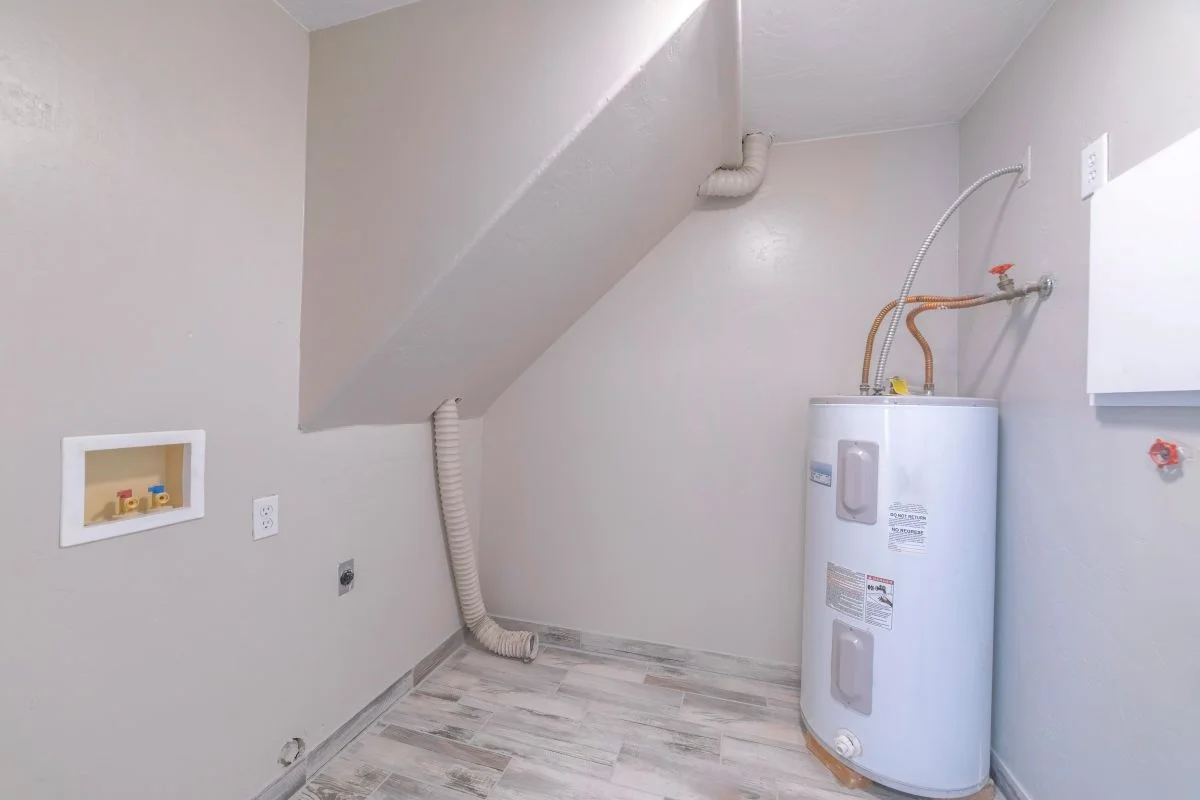
Tank water heaters store hot water in a tank and refill it as hot water is used throughout the day. The First-Hour-Rating (FHR) measures how many gallons of hot water a water heater can deliver during the busiest hour of use.
FHR combines:
- Tank capacity
- Burner or heating element strength
- Recovery rate
The recovery rate affects how quickly the system can heat additional water once the tank starts to empty. This is especially important in Utah’s colder groundwater temperatures.
Tankless Water Heater Measurements
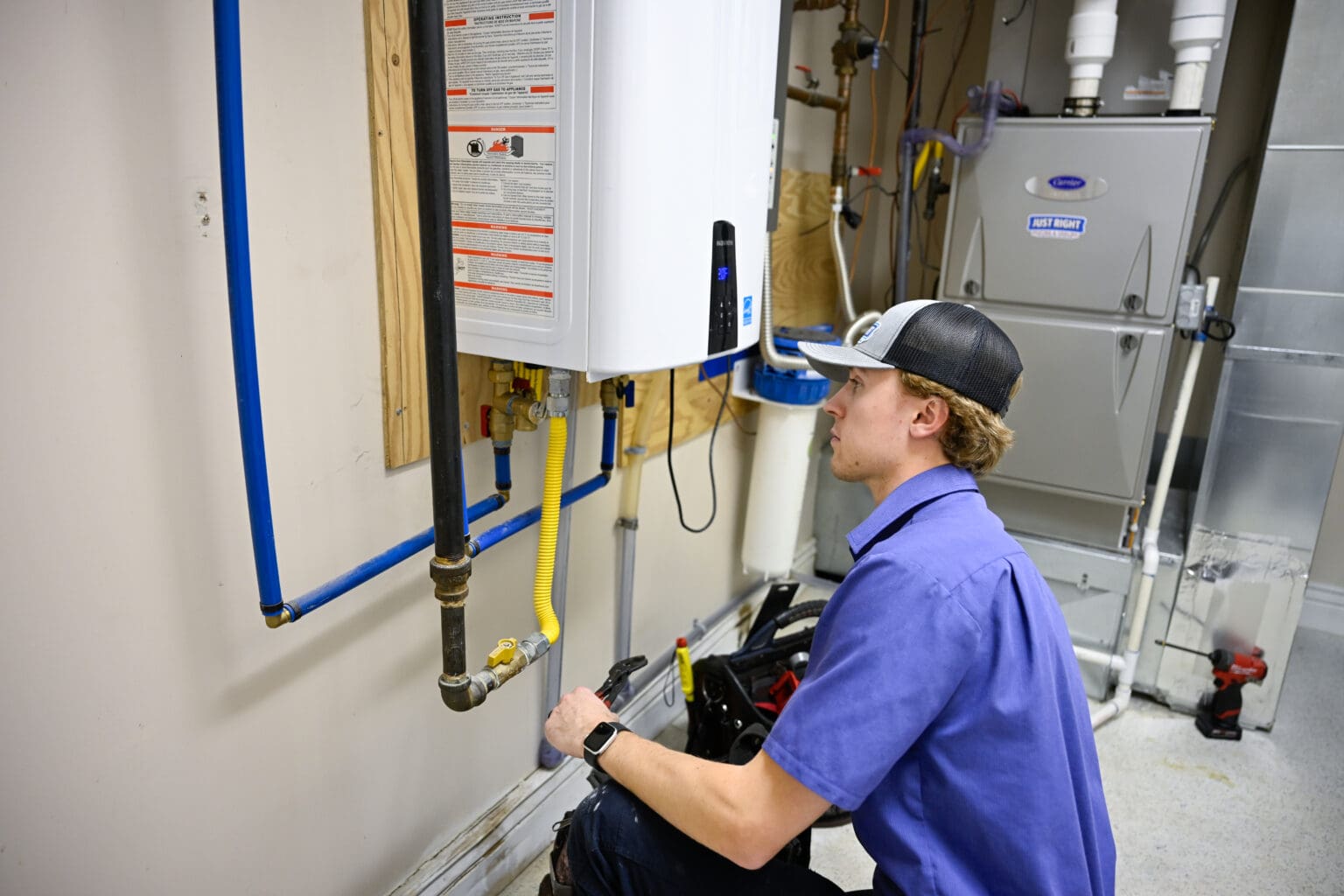
Tankless water heaters heat water on demand instead of storing it in a tank. These systems use gallons per minute (GPM) to determine how many fixtures and appliances can run simultaneously without losing hot-water pressure.
If several fixtures run simultaneously, your tankless system needs enough capacity to meet the total demand. Homes at higher elevations may also need additional sizing considerations.
How To Calculate Your Household’s Hot Water Demand
What size tankless hot water heater do you need? The best way to determine the size water heater you need is to look at your household’s peak hot-water usage. You should also consider standard flow rates and any future changes in hot water demand.
Here’s how to calculate your demand:
Peak Hour Usage Assessment
One of the biggest factors in water heater sizing is understanding when your home uses the most hot water. For many households, that happens during the morning rush or evening routines.
Common peak usage situations include:
- Multiple showers running at once
- Laundry and dishwashing running at the same time
- Back-to-back baths or showers
- Several family members getting ready at the same time
Seasonal changes can also affect performance. During colder months, incoming groundwater temperatures are lower, which means your water heater has to work harder to produce the same amount of hot water.
Fixture Flow Rate Calculations
According to the EPA, standard fixture flow rates can help homeowners estimate how much hot water their household uses each day.
Typical fixture flow rates include:
- Standard shower: 2–2.5 GPM
- Low-flow showerhead: 1.5–2 GPM
- Bathroom sink: around 1 GPM
- Dishwasher: 1–1.5 GPM
- Washing machine: around 2 GPM
Low-flow fixtures may reduce overall demand, while homes with multiple bathrooms, soaking tubs, or simultaneous shower use may need a larger-capacity system.
Future Planning Considerations
When sizing a new water heater, it’s important to think about your future needs as well as your current household size.
You may want to plan for:
- A growing family
- Additional bathrooms or home additions
- Aging-in-place modifications
- New appliances with higher hot water demands
Energy efficiency upgrades can also affect sizing decisions. Installing low-flow fixtures or water-saving showerheads may reduce overall hot water demand and improve efficiency over time.
If you’re unsure how much capacity your household needs, a professional assessment can help you compare options and choose the right system.
Tank Water Heater Sizing Guidelines
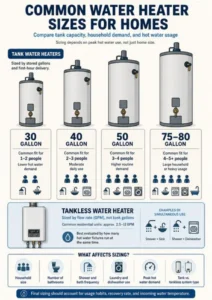
Tank water heaters are typically sized based on household size and daily hot water usage. Choosing the right capacity helps ensure your household has enough hot water during peak usage without wasting energy.
General sizing recommendations include:
- 1–2 people: 30–40 gallons
- 3–4 people: 40–50 gallons
- 5 or more people: 50–80 gallons
Here’s what to know about tank water heater sizing:
Standard Capacity Recommendations
Choosing a system that matches your household’s needs can help improve comfort and reduce the risk of running out of hot water.
Here are standard capacity recommendations based on home size:
| Household Size | Recommended Tank Size | Common Usage Examples |
|---|---|---|
| 1–2 People | 30–40 Gallons | One bathroom, moderate daily hot water use |
| 3–4 People | 40–50 Gallons | Multiple daily showers, laundry, and dishwasher use |
| 5+ People | 50–80 Gallons | Larger families, multiple bathrooms, higher-demand routines |
| High-Demand Homes | 80+ Gallons | Large soaking tubs, simultaneous appliance and shower use |
Recovery Rate Considerations
Recovery rate measures how quickly a water heater can heat a fresh supply of water after the tank has been partially emptied.
Gas water heaters generally recover faster than electric systems, which may make them a better fit for households with high hot water demand.
A faster recovery rate can help:
- Support back-to-back showers
- Reduce wait times for hot water
- Improve performance during peak usage periods
Even if two systems have the same tank size, the model with the higher recovery rate may provide better overall performance for busy households.
Tankless Water Heater Sizing Guidelines
What size tankless water heater do you need? Tankless water heaters are sized by gallons per minute (GPM) rather than storage capacity. To determine the right size, you need to calculate how many fixtures and appliances use hot water at the same time.
Groundwater temperature also affects sizing requirements. Colder water requires the system to work harder to maintain comfortable temperatures. Additionally, gas models typically deliver higher GPM, while electric models are better suited for smaller homes or point-of-use applications.
Here’s how to know what size tankless water heater you need:
Whole-House Tankless Sizing
Whole-home tankless systems supply hot water throughout the house on demand. General sizing recommendations include:
- 2-bathroom homes: 6–8 GPM
- 3-bathroom homes: 8–10 GPM
- 4-bathroom homes: 10–12+ GPM
Proper installation is also important for performance, such as gas lines and electrical requirements for proper sizing.
Point-of-Use Applications
Point-of-use tankless systems are smaller units designed to serve a single area or fixture in the home.
These systems are commonly used for:
- Guest bathrooms
- Kitchen additions
- Basement bathrooms
- Remote fixtures far from the main water heater
In some homes, point-of-use systems may work alongside a larger main water heater to improve convenience and reduce wait times for hot water.
If you’re comparing tankless water heater options, choosing the right size can improve efficiency and deliver more consistent hot water throughout your home.
Common Water Heater Sizing Mistakes Utah Homeowners Make
Choosing the wrong size water heater can lead to ongoing performance issues, higher utility costs, and unnecessary wear on the system.
Some of the most common water heater sizing mistakes homeowners make include:
- Undersizing due to lower purchase price
- Oversizing “just to be safe”
- Ignoring Utah’s hard water impact on capacity over time
- Skipping routine maintenance that helps maintain efficiency and usable capacity
- Not accounting for high-altitude effects on gas tankless performance
- Choosing a tankless unit without adequate gas line capacity
- Failing to account for altitude and climate factors
Professional Installation Benefits for Utah Homes
Installing a new water heater requires precision and care to keep your home safe and your water warm. A professional installation can help ensure your new water heater is properly sized, safely installed, and operating efficiently for your household’s needs.
Benefits of professional installation include:
- Local code compliance and permit requirements
- Gas line sizing verification for tankless units
- Proper venting for Utah’s temperature variations
- Warranty protection and rebate qualification
- Just Right Plumbing, Heating, & Cooling’s sizing assessment process and guarantee
Code Compliance and Permits
According to the International Code Council (ICC), water heater installations must follow Utah plumbing code requirements.
A professional installation helps verify:
- Proper venting and connections
- Safe gas and electrical hookups
- Correct pressure relief valve installation
- Code-compliant placement and clearances
At Just Right, our residential plumbing services adhere to all permits, inspections, and code requirements to reduce the risk of future safety or performance issues.
Utility Rebate Optimization
Some high-efficiency water heaters may qualify for local utility rebate programs. A professional installation can help homeowners:
- Choose qualifying equipment
- Complete the required documentation
- Meet installation standards tied to rebate eligibility
Available rebates and efficiency programs may vary depending on the type of water heater and utility provider.
Frequently Asked Questions
What size water heater do I need for a family of 4 in Utah?
Most Utah families of 4 need a 40-50-gallon tank water heater or an 8-10 GPM tankless unit. This accounts for Utah’s cold groundwater, which requires a 70-80°F temperature rise.
What size water heater do I need for Utah’s hard water?
Utah’s hard water doesn’t change initial sizing requirements, but mineral buildup reduces capacity over time. Professional maintenance helps maintain rated capacity longer.
How does altitude affect tankless water heater sizing in Utah?
Gas tankless units lose 4% BTU capacity per 1,000 feet of elevation. At Salt Lake City’s 4,226 feet, units produce about 17% less heat than sea level ratings.
Should I oversize my water heater for Utah winters?
No, proper sizing based on peak demand and Utah’s groundwater temperature is more efficient than oversizing. Oversized units waste energy year-round.
What size tankless water heater do I need for a 3-bathroom Utah home?
Most 3-bathroom Utah homes need 10-12 GPM capacity to handle simultaneous shower and appliance use with Utah’s cold groundwater.
Contact Just Right Plumbing, Heating & Cooling for Your Next Water Heater
Choosing the right water heater size can help improve comfort, efficiency, and long-term performance in your home. Our experts at Just Right Plumbing, Heating, & Cooling can help you decide what size water heater you need for your home based on your daily hot-water demand.
We also offer water heater repair services to keep your system in peak performance year after year.
Contact our team today to schedule an estimate and find the right water heater for your home.